






Overview of the Global Bulletproof Vest Market
Recently, the assassination of Japanese Prime Minister Abe and the attack on a Brazilian politician's birthday party have drawn high attention from the market to bulletproof vests, and related concept stocks have continued to be highly favored. This can't help but remind people of the assassination of US President William McKinley in 1901, which also sparked people's exploration of the bullet defense ability of clothing at that time.
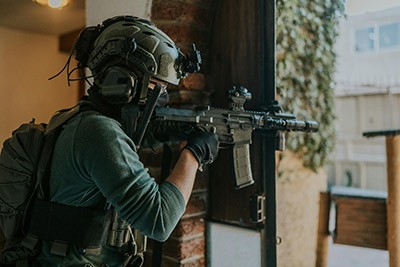
Globally, there are only a few countries that can independently complete the entire process from the research and development of raw materials for bulletproof vests to the production of finished products, namely China, the United States and the Netherlands. It is worth mentioning that bulletproof vests made in China account for as much as 70% of the global market share, and the domestic QGF03 helmet has achieved an astonishing 100% in terms of elasticity resistance.
Main bulletproof materials
Kevlar material
Kevlar, a revolutionary material widely used in bulletproof fields, is renowned for its outstanding elastic resistance and lightweight properties. In the global bulletproof materials market, Kevlar holds a significant position, providing solid protection for countless soldiers and law enforcement officers. In the early 1970s, DuPont of the United States successfully developed poly (p-terephthalyl) p-phenylenediamine, a material known by its trade name Kevlar. Kevlar not only possesses extremely high strength and modulus, but also demonstrates high-temperature resistance, bringing revolutionary changes to the global bulletproof materials market. The bulletproof vest made of para-aramid, despite weighing only 1.5 kilograms, can effectively resist the energy impact brought by bullets, shrapnel, etc.
◆ Ultra-high molecular weight polyethylene fiber
Since China initiated research on ultra-high molecular weight polyethylene fibers in 1985, institutions such as Donghua University have successively joined the research and development ranks. In 1999, China made a breakthrough and became the fourth country in the world to master the production and application technology of this key fiber. UHMWPE composite materials perform exceptionally well in terms of impact load capacity, which is up to ten times that of steel. Currently, they are being used to manufacture bulletproof and riot helmets.
◆ Carbon nanotubes and new materials
Carbon nanotubes have attracted much attention due to their high strength and excellent elastic modulus. Its unique cylindrical structure endows it with extremely high tensile strength and elongation at break. Although single-walled carbon nanotubes (SWCNTs) have an advantage in strength, their high price limits their wide application. In contrast, multi-walled carbon nanotubes (MWCNTs), although slightly inferior in strength, are affordable and easy to produce. In addition, the emergence of new materials such as graphene nanoribbons and carbon nanofoams has brought more possibilities for the application of carbon nanotubes. Bulletproof vests made of carbon nanotube fibers are not only thinner, lighter and softer, but also have the function of preventing punctures.
Technology and application trends
◆ Material Properties and Research Progress
The world is constantly developing new bulletproof materials to enhance their protective performance and reduce weight, thereby meeting the demands of modern battlefields. With the rapid progress of chemical industry, many synthetic polymer materials such as polystyrene and PBO (PBO) constantly emerging, including polyphenylenebenzobenzodi oxide (PBO) is striking. This material has a low density, which can effectively reduce the weight of bulletproof vests and also has excellent protective capabilities.
◆ Practical Application and Future Outlook
Innovations such as 3D printing technology are gradually changing the way bulletproof vests are made, enhancing the efficiency and effectiveness of practical applications. Scholars from Brown University in the United States have begun to explore the technology of 3D printing bulletproof vests. This innovation enables soldiers to quickly and easily make brand-new bulletproof vests in the wild, and the entire process can be completed in just a few hours.