





The development of modern bulletproof vests shows a trend of functional integration. The new type of intelligent bulletproof vest is equipped with built-in sensors that can monitor the location of the bullet and the degree of damage in real time. Some models are also equipped with a temperature control system to adapt to extreme environments. In terms of materials, the energy absorption efficiency of graphene composite bulletproof materials is 40% higher than that of traditional materials, but due to their high cost, they have not yet been widely adopted. The future development direction is to develop adaptive protection systems that balance protection and comfort, and dynamically adjust the protection level through deformable materials.
It is necessary to clearly recognize that bulletproof vests are merely passive protective measures and cannot replace tactical awareness and risk assessment. When carrying out high-risk tasks, a multi-layered protection system should be established, combining the utilization of cover, tactical formations and fire suppression to form a three-dimensional protection. At the same time, attention should be paid to the impact of protective equipment on human body functions. Wearing heavy-duty bulletproof vests for a long time can lead to heat stress responses, and it is necessary to arrange rotation and rest reasonably.
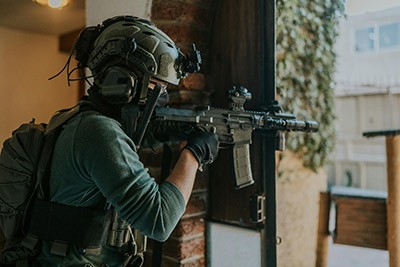
The correct application of strategies requires the combination of tactical actions. When encountering fire suppression, keep the bulletproof vest facing the enemy head-on and use the tilt Angle of the insert plate to enhance the bulletproof effect. During the exercise, pay attention to the position of the hem of the bulletproof vest to prevent restricted movements from affecting tactical maneuverability. When working as a team, it is necessary to clearly define the key points of protection for each individual and form a cross-protection system. It is particularly important to note that bulletproof vests cannot replace tactical cover. In any case, physical cover should be sought first.
When choosing bulletproof vests, it is necessary to carefully check the NIJ certification standards and pay attention to the differences in testing standards among different countries. Domestic products must have a test report issued by the Ministry of Public Security, and imported products should be confirmed to comply with the usage norms of their home country. Products with abnormally low prices may have material defects. Some counterfeits use fiberglass reinforced plastic to pass off as bulletproof ceramics, and their actual protective capabilities are seriously insufficient. It is recommended to conduct live-fire tests every six months to ensure that the protective performance does not decline.
Daily maintenance directly affects the protective effectiveness. For soft bulletproof vests (Leabharlann Baidu), it is necessary to check whether the fiber layer has delaminated or hardened every quarter. For hard insert plates, it is necessary to check whether there are cracks on the surface. When cleaning, it is strictly forbidden to use strong acid or strong alkali detergents, and direct sunlight should be avoided to prevent material aging. The storage environment should be kept dry and well-ventilated. A damp environment will reduce the strength of aramid fibers. The service life is usually five years. Even if the appearance is intact, it needs to be replaced regularly.
There are obvious limitations to using bulletproof vests. Ammunition that exceeds the protection level can still cause penetration damage. Even if it is not penetrated, it may lead to rib fractures or internal organ damage due to kinetic energy conduction. When wearing it, it is essential to ensure that the bulletproof plate fully covers the heart and lung areas. Incorrect wearing can reduce the protective effect by more than 70%. In special environments, the influence of temperature also needs to be taken into account. Extremely cold environments may cause bulletproof materials to become brittle, while high-temperature environments will accelerate the aging of the resin matrix.
Tactical bulletproof vests are protective equipment specially designed to defend against bullets, shrapnel or other high-speed impact objects. Their core function is to reduce the fatal risk to the human body when under attack. This type of equipment is commonly found in military operations, law enforcement and duty performance, security tasks, and special industry operation scenarios. It is classified into multiple grades based on different protection requirements, and there are also differences in materials and structures.
Modern tactical bulletproof vests are mainly composed of three parts: bulletproof layer, cushioning layer and outer cover. Bulletproof layers are mostly made of ultra-high molecular weight polyethylene fibers, aramid fibers or ceramic composite materials, which achieve protection by absorbing and dispersing impact energy. The buffer layer is usually composed of foamed materials or gels and is used to reduce the damage to internal organs caused by blunt trauma. In addition to carrying bulletproof plates, the outer cover is also designed with MOLLE system modular mounting points, making it convenient to carry tactical equipment.
Bulletproof vests classified by protection level below IIIA can withstand pistol bullets and are suitable for daily use by plainclothes police or security personnel. Bulletproof vests of Grade III and above are equipped with ceramic or steel plate inserts and can defend against rifle bullets. They are commonly seen in military combat environments. The specially designed bulletproof vests also have puncture resistance, which is particularly important for handling prison riots or crowd control. Some models have an expanded design in the protected area and can be equipped with components such as neck guards and groin guards.
In practical application scenarios, bulletproof vests should be reasonably selected based on the threat level. Urban counter-terrorism operations usually require a balance between protection and mobility. Lightweight Class III bulletproof vests are selected in combination with side protection plates. Escort missions place greater emphasis on concealment and often opt for soft bulletproof vests with built-in bulletproof plates. When special police are on a tough mission, they choose fully protective bulletproof vests, with a focus on protecting key parts of the trunk and limbs. It should be particularly noted that the protective area of a bulletproof vest is inversely proportional to its protective grade. When choosing, a balance should be struck between safety and flexibility.